



What wonderful care do our pups receive?
Healthy dogs need nutrient-dense diets that vary per stage of life. Expectant mamas need more calories, protein, healthy fats, carbs, minerals, vitamins and supplements. Chili loves to eat raw/fresh meals from The Pet's Table, veggies, Air-dried salmon bites, fresh raw salmon filets, venison & emu!
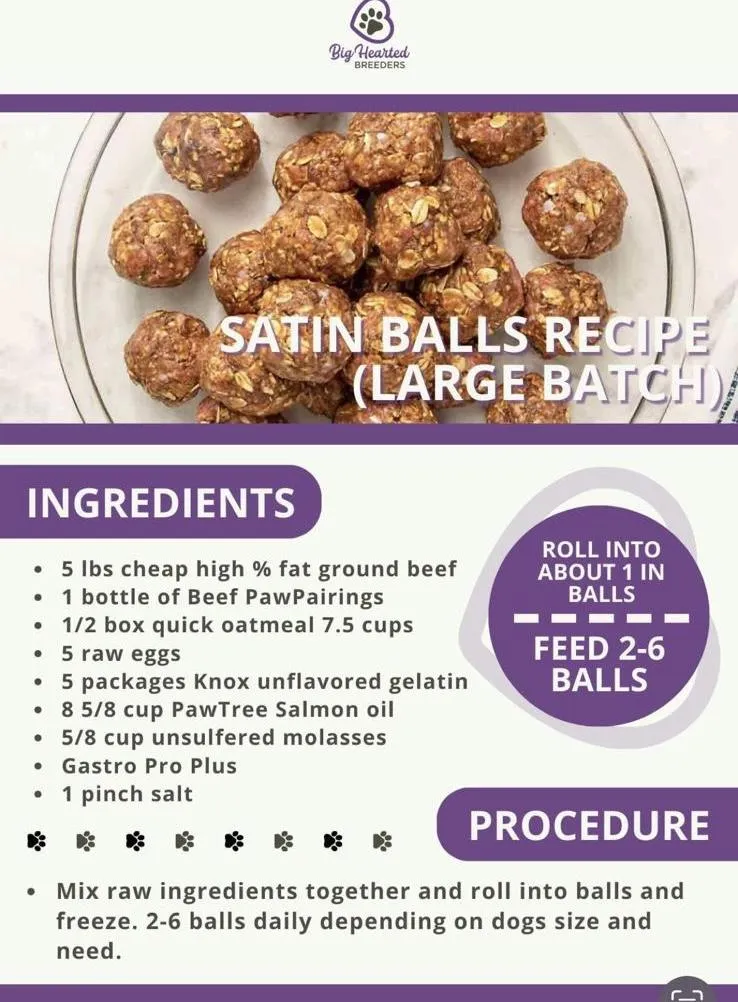
The 'Satin Balls' below are high-calorie 'treats' that Chili enjoys daily. She snacks on 4-6 per day in addition to her regular meals. We like to adjust this recipe to add essential nutrients through a few more ingredients: wheat germ flakes, flaxseed, omega oil with olive, flax and salmon oils, bacon and our farm fresh raw eggs! Watch this video of us making a huge batch! We keep these snack balls frozen and feed directly from there.
Prenatal and Nursing Diet
A standard Goldendoodle expecting puppies will need a significant increase in calories during the last month of pregnancy. Normal caloric intake is approximately 1200 calories per day. During the second half of her pregnancy, she will need 2000+ calories per day!
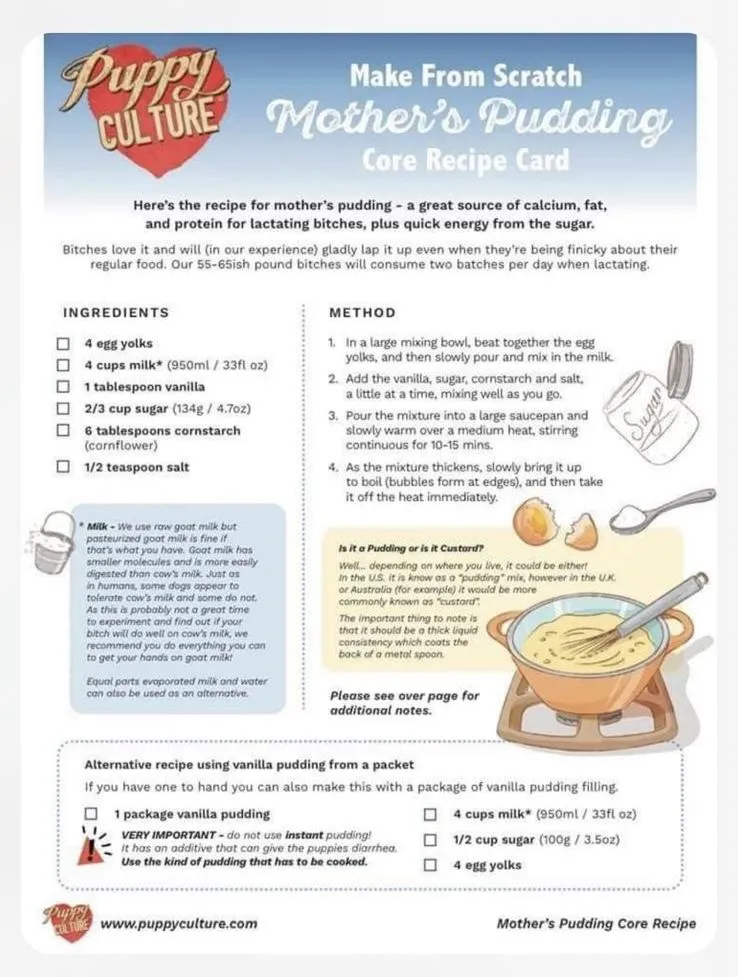
After the puppies are born, lactating mamas need even more carbs and calories to feed up to 12 little pups! That is a lot of milk. We provide a warm, rich creamy 'mother's pudding' milk frequently throughout the day. She may drink 1 gallon+ per day! We use a premium goat milk base &
our farm fresh eggs from our hens!
Mama's Supplement
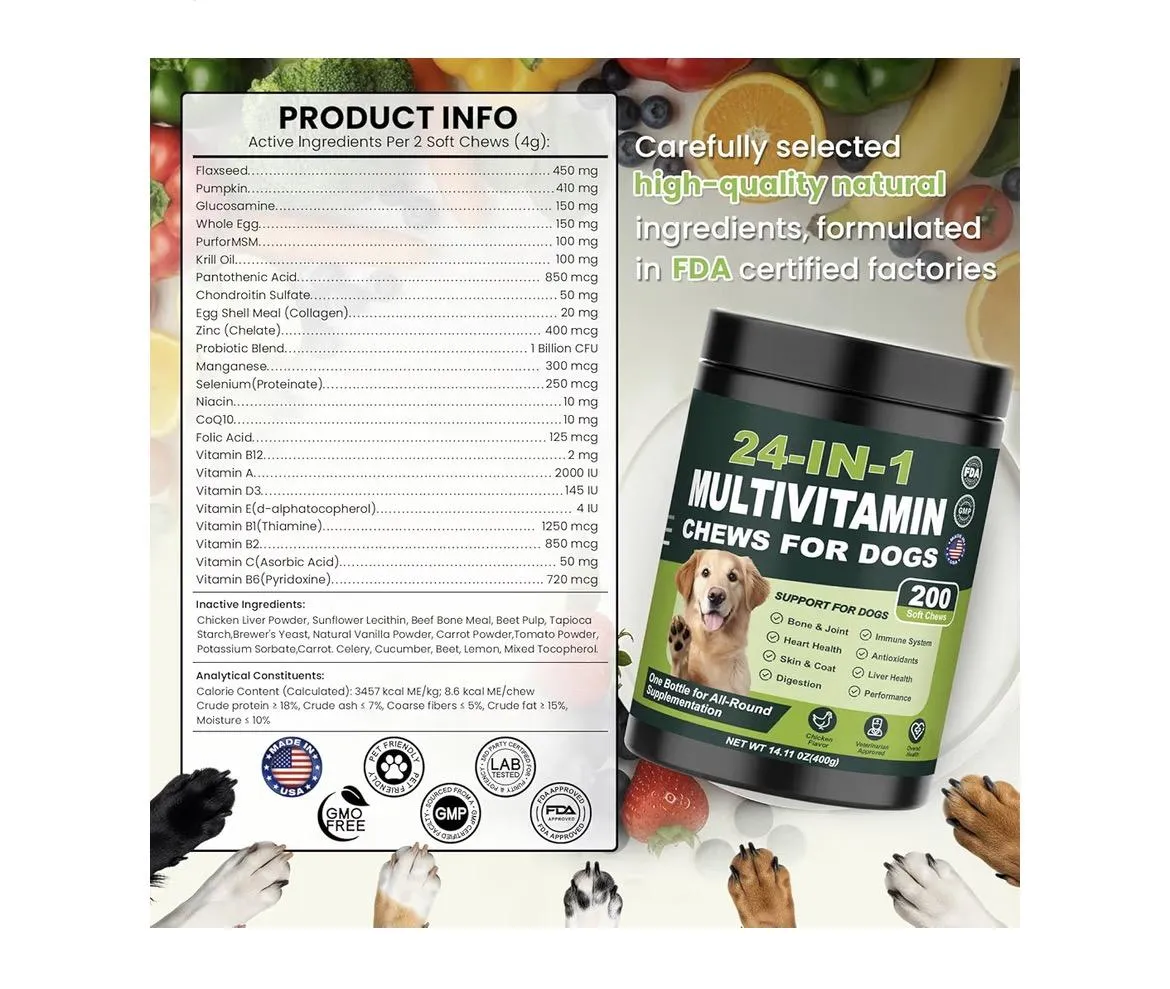
A comprehensive supplement to provide vital nutrients is highly beneficial during pregnancy. Our expecting mama's enjoy '24-in-1'
veterinarian-approved nutrient chews daily.
Puppy Diet


Our puppies will nurse for 8 weeks and receive the very best start in life directly from their healthy, nurturing mama!
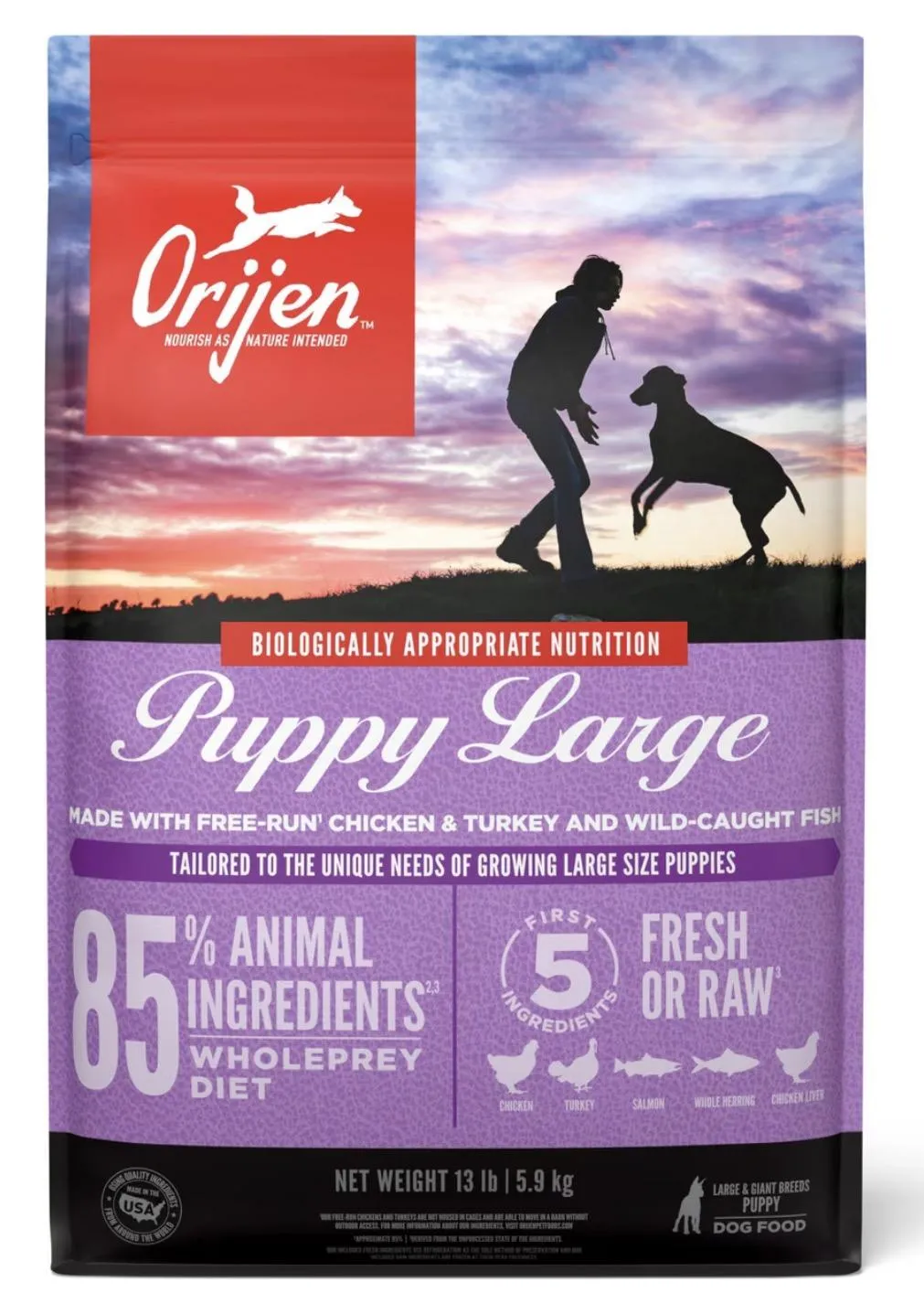
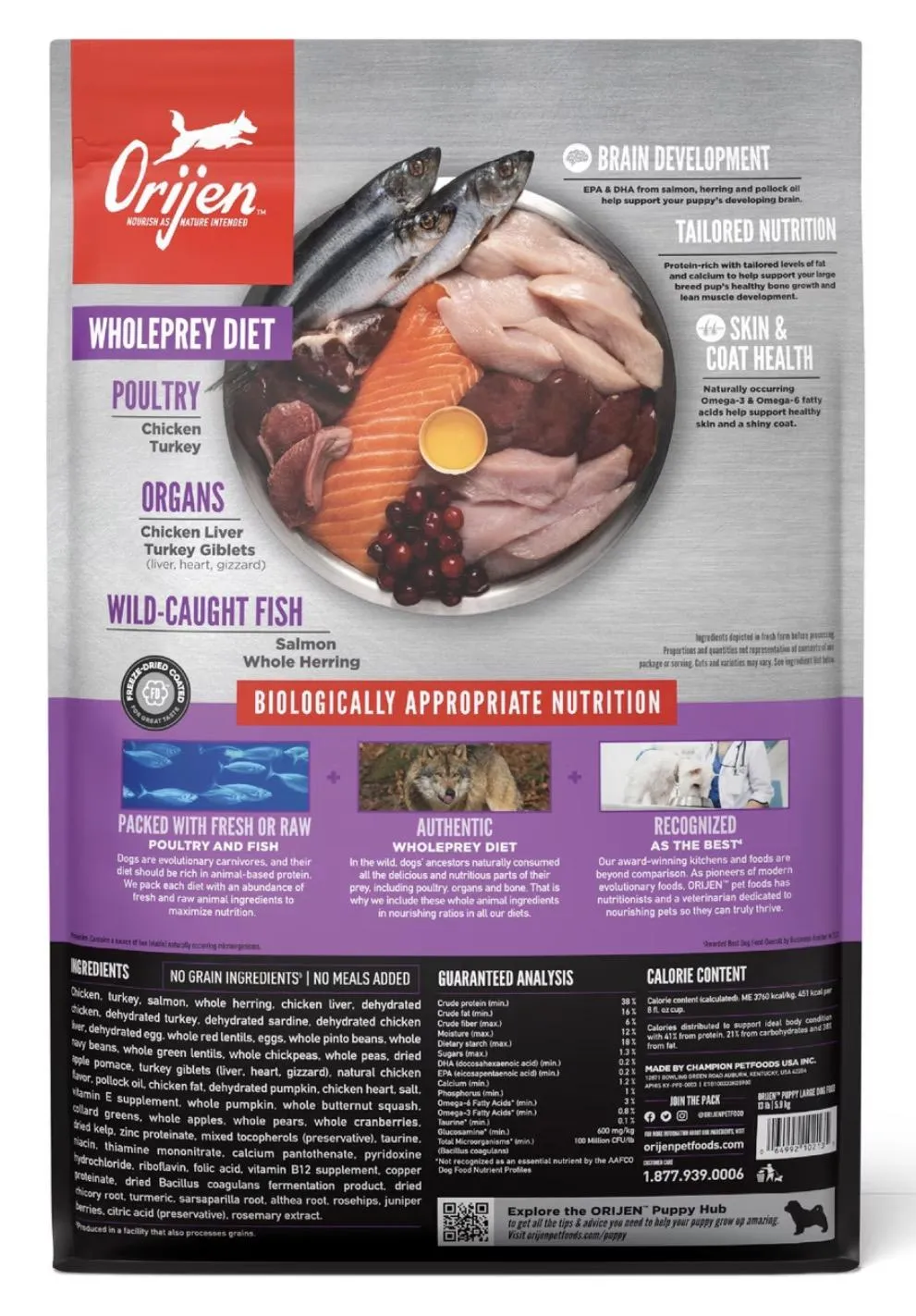
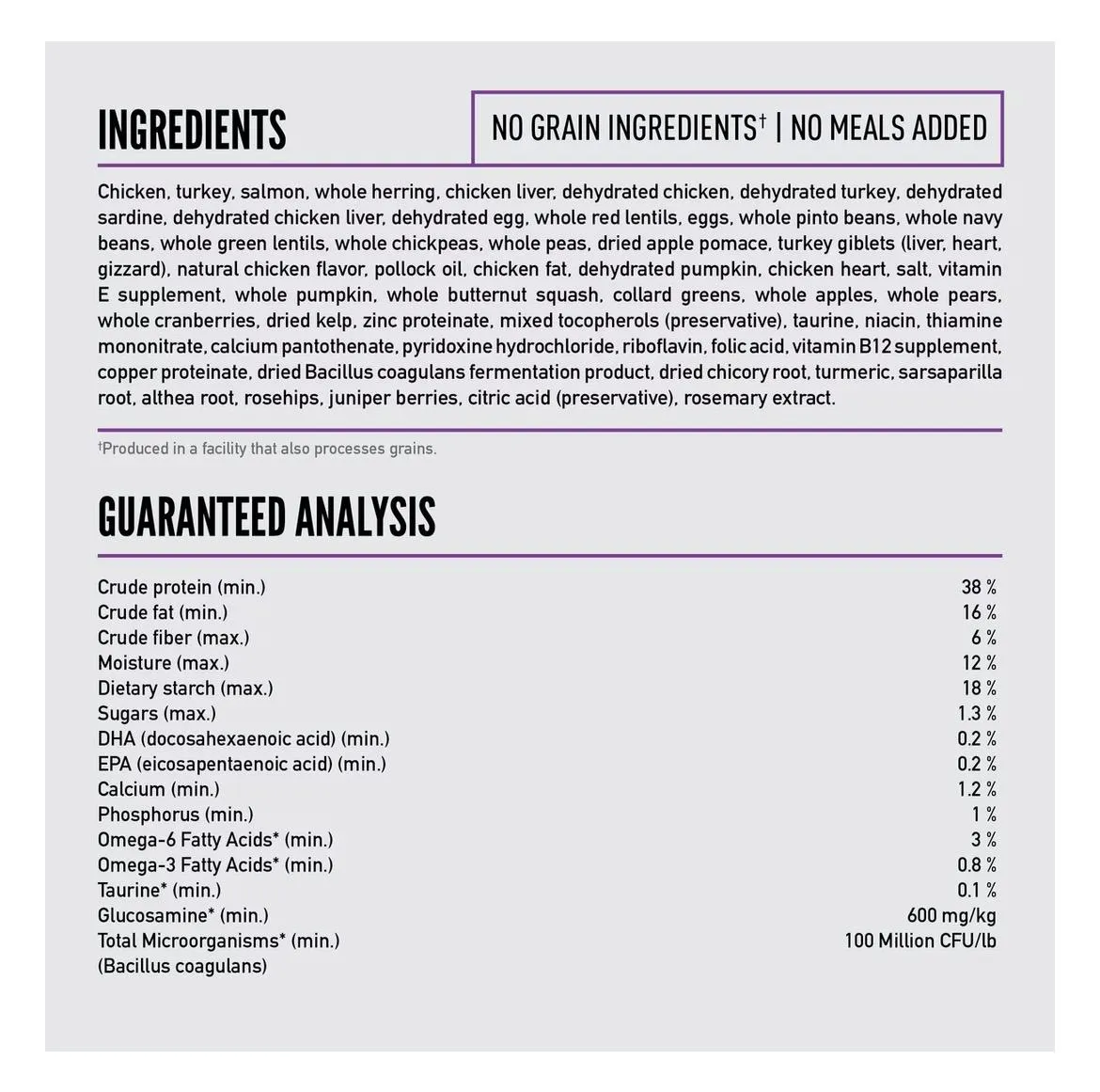
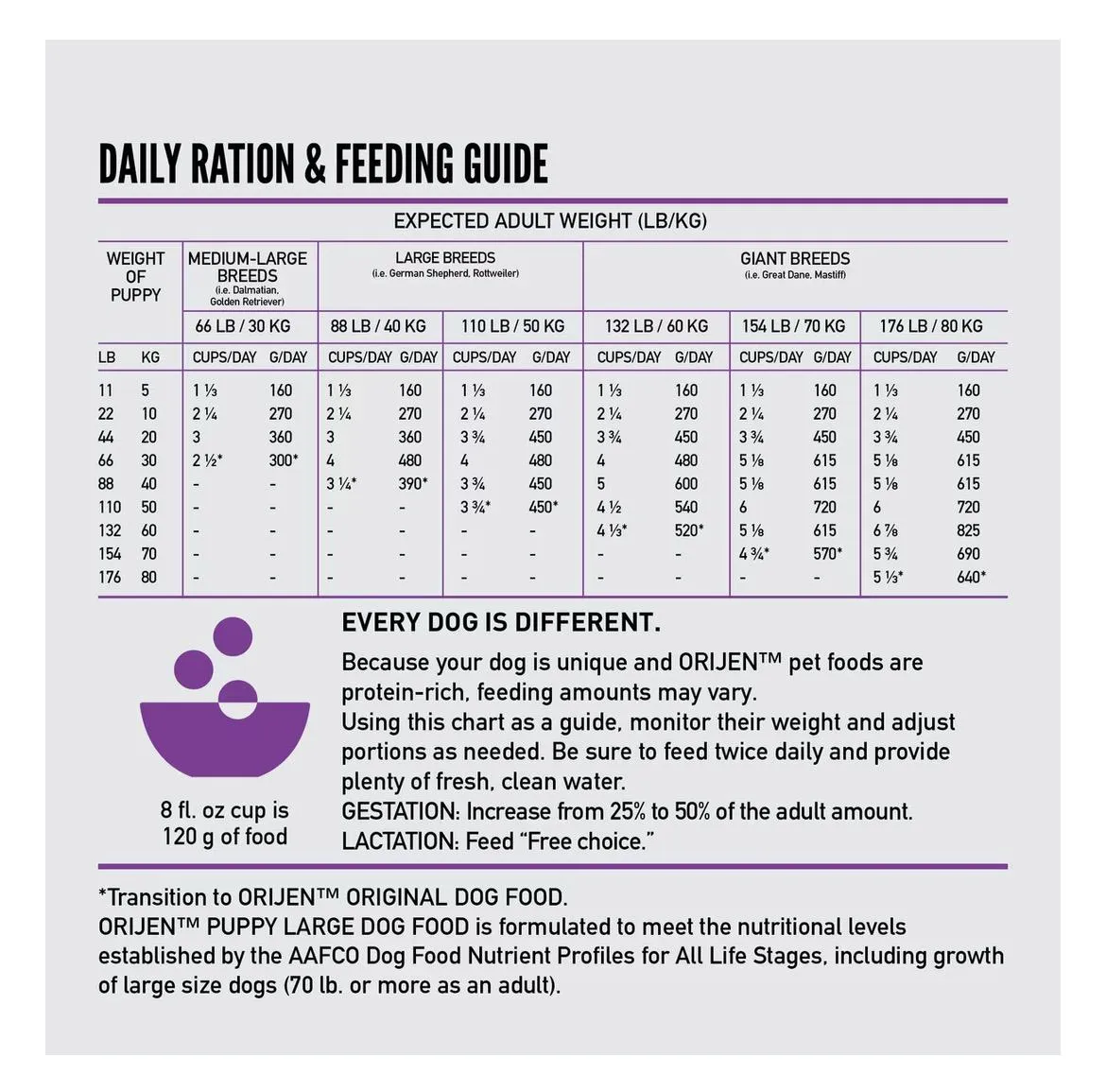
We will begin to supplement at 6 weeks with an AAFCO-approved, large-breed puppy formulated food- softened with warm water in weight-based portions. Orijen Large Puppy Breed food is made in the USA- grain free- with wholefoods ingredients that are fresh/raw/dried poultry, sardines, salmon, herring, pollock oil, chicken/turkey organs and bone, pinto/navy beans, red/green lentils, chickpeas, green peas, pumpkin, butternut squash, apples, cranberries, pears, collard greens, kelp, eggs, herbs and super greens.
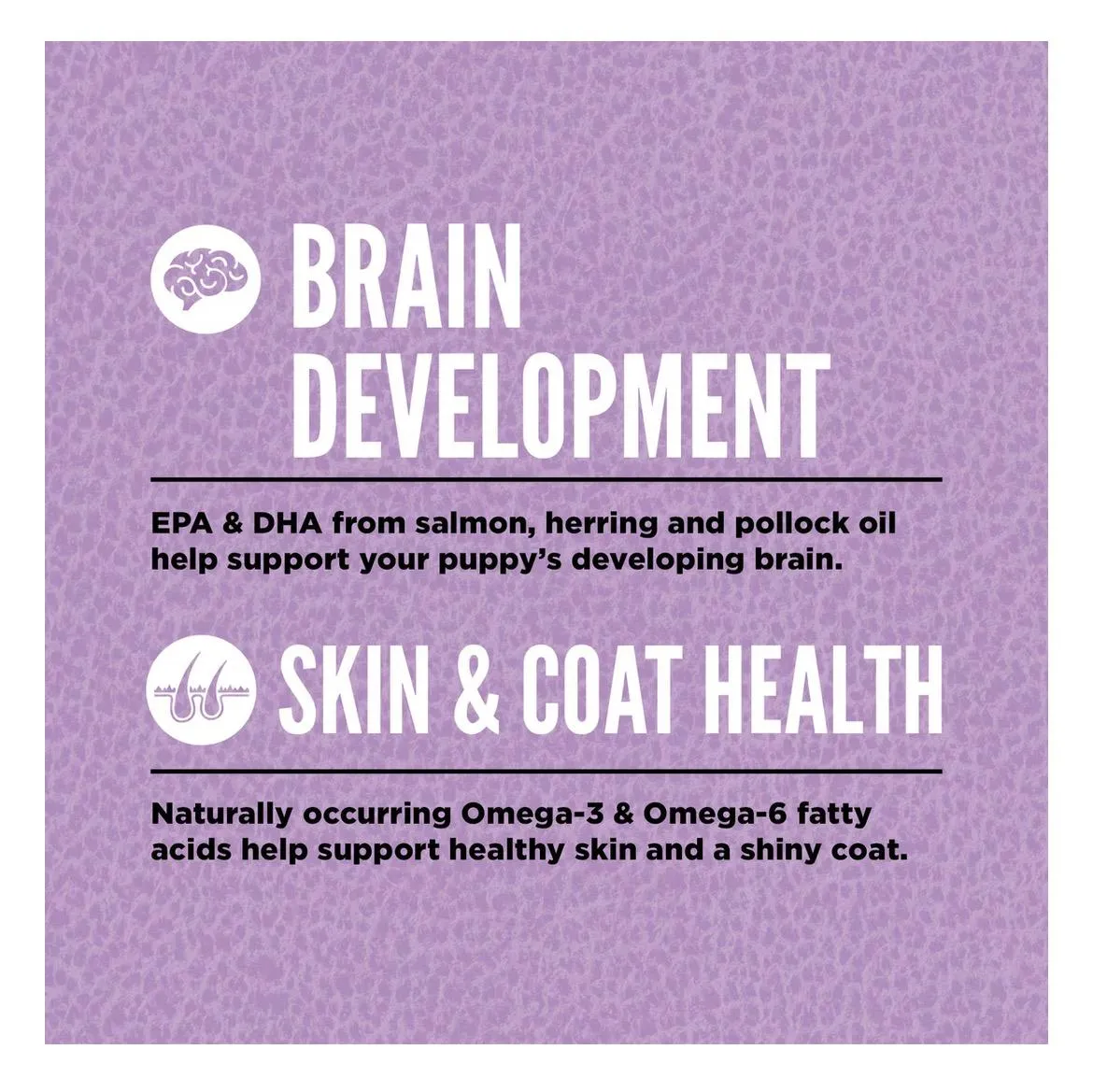
Early nutrition is vital for development and growth. Proper feeding for puppies moderates calcium intake for paced bone development, balanced with phosphorus, DHA for brain and eye development, high-quality protein and nutrients for joint support. We spare no expense to make sure your puppy leaves healthy, happy and well-fed!

- Puppy Care & Training Therapies-
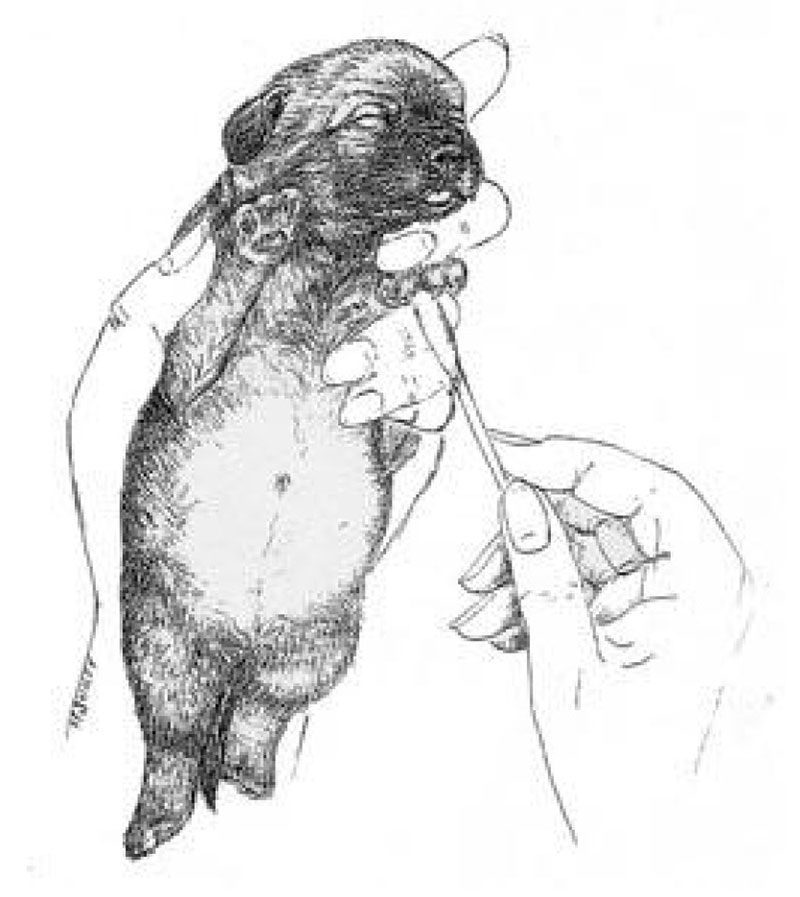
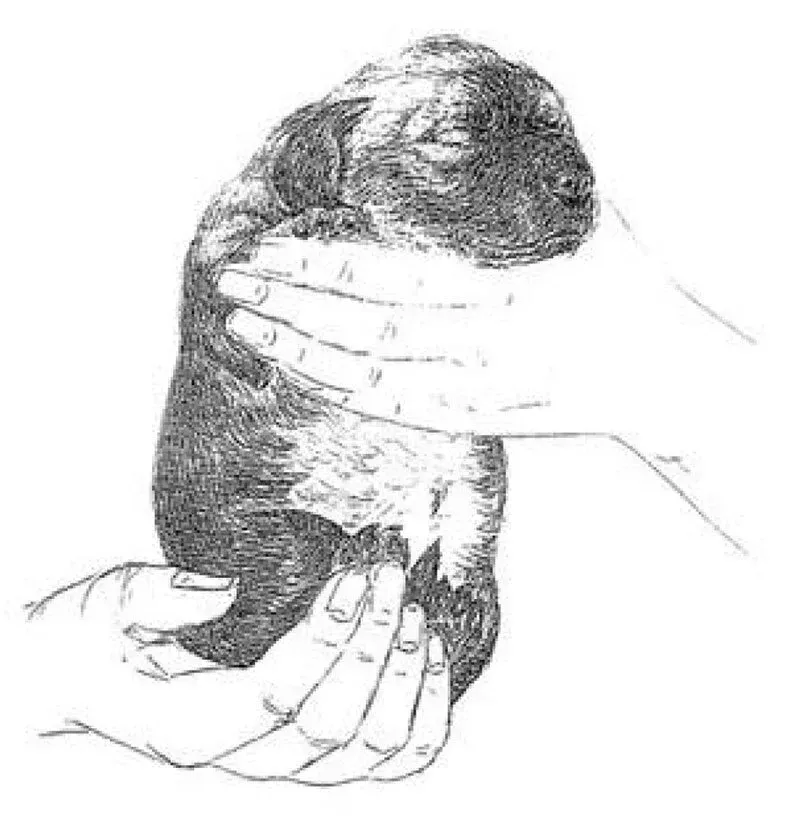
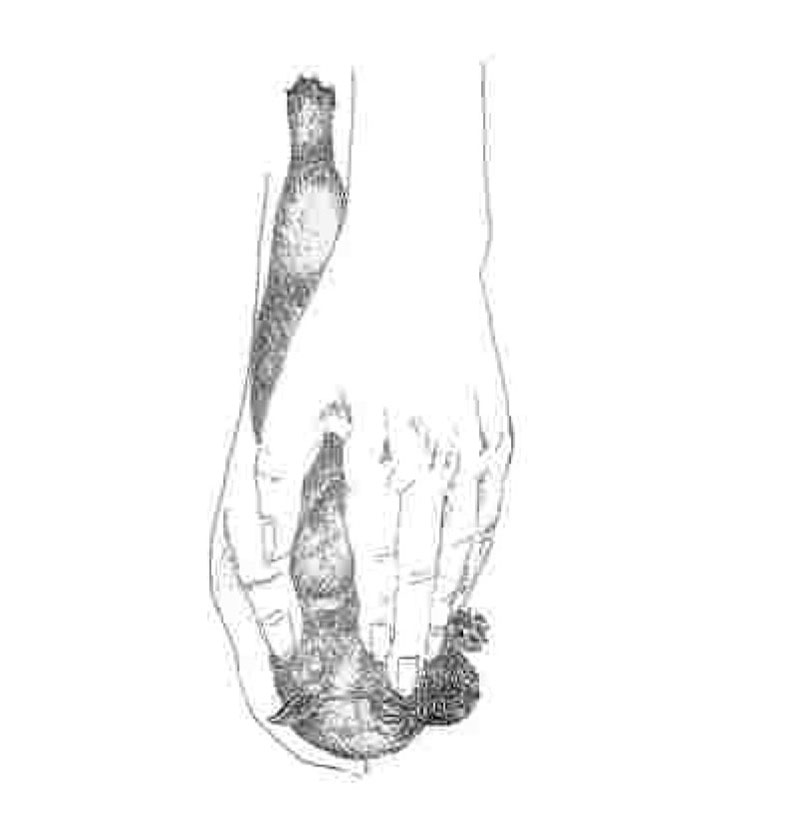
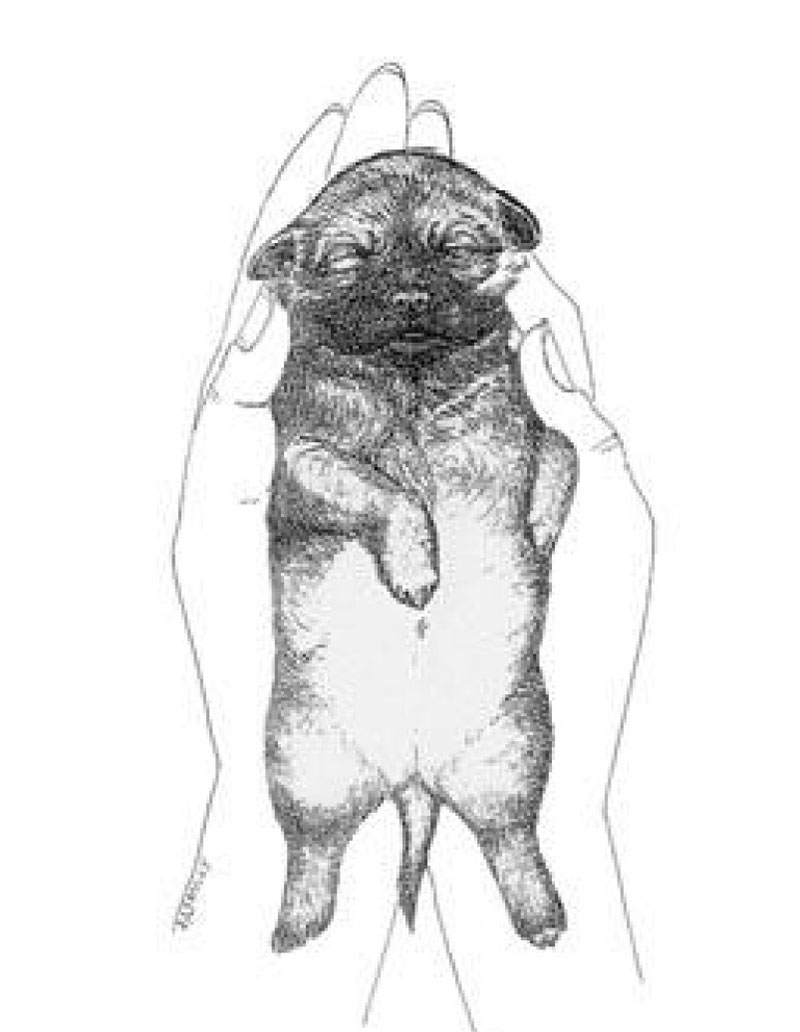
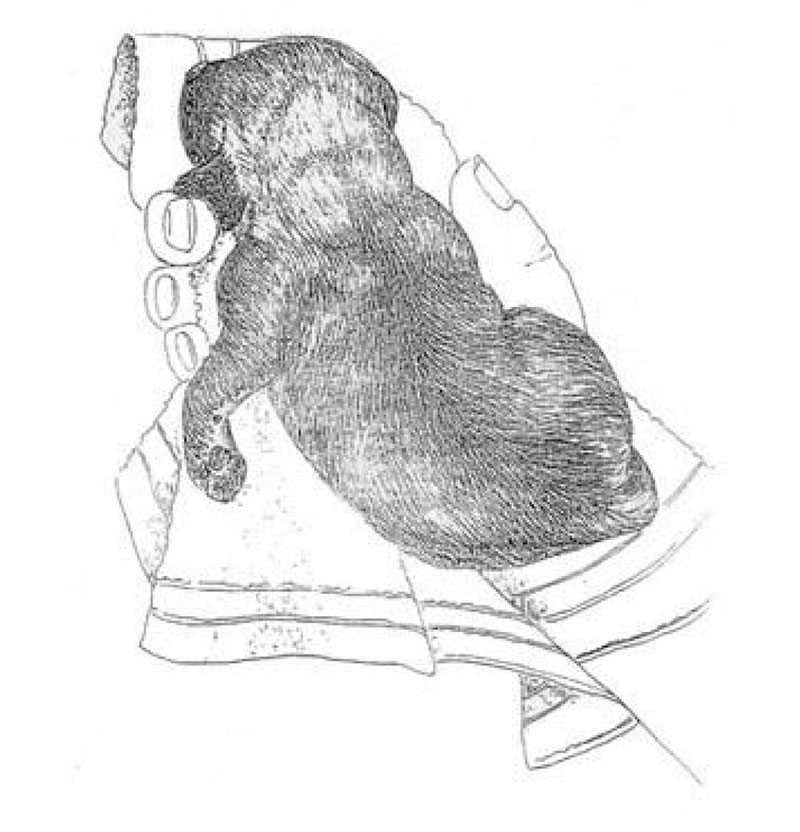
Early Neurological Stimulation (ENS)
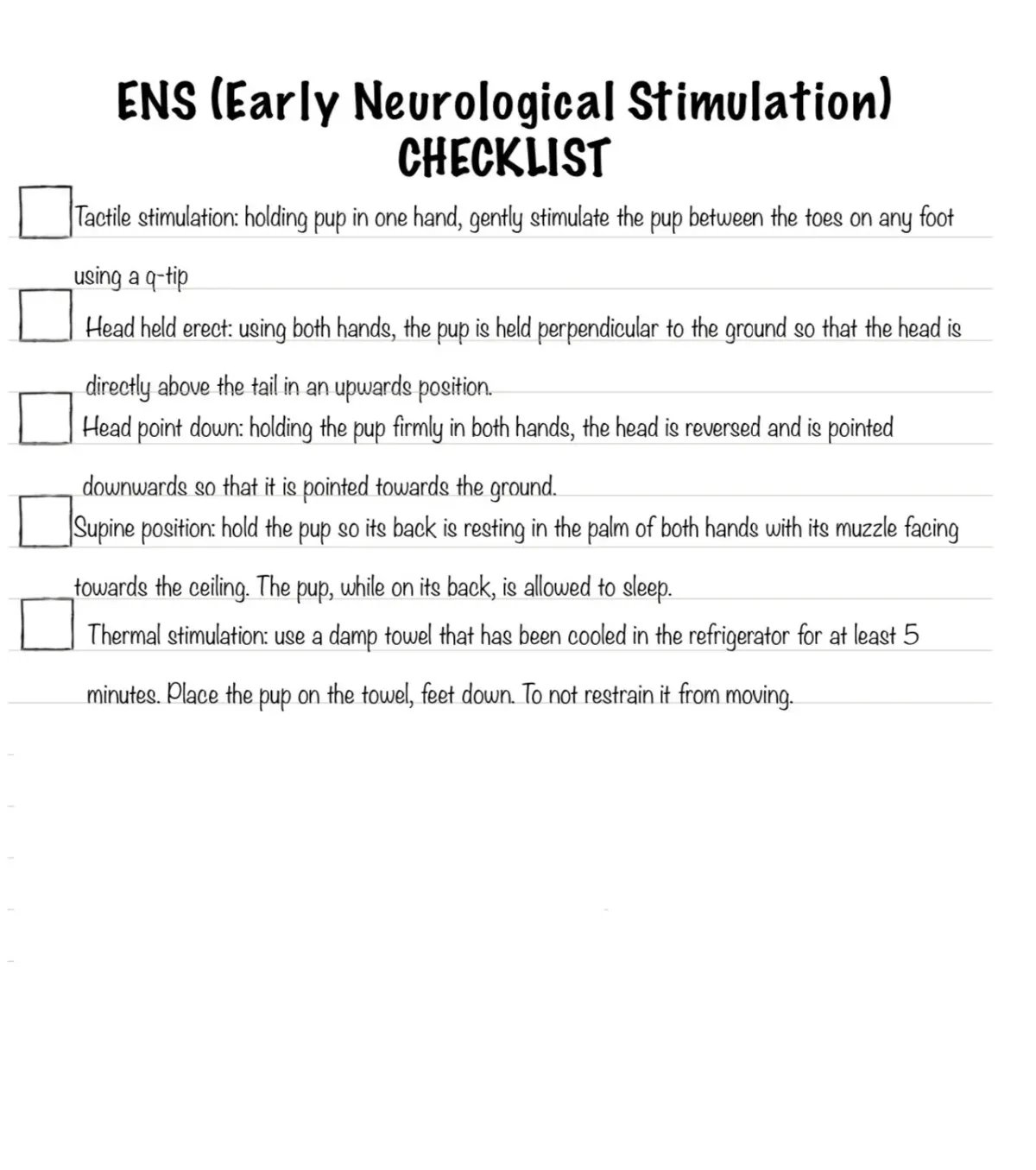

What is ENS?
Early Neurological Stimulation incorporates gentle handling and stimulation of newborn puppies from days 3-16 of life. These 5 main steps are applied daily to introduce mild, controlled tactile positional and thermal stressors.This is a low-risk enrichment tool utilized by experienced breeders.
These intentional exercises help to activate the nervous system gently very early in development to convey specific health benefits.
Studies show that ENS therapy promotes:
-Relaxation and resilience
-Sensory adaptation
-A stronger cardiovascular system and heart function
-A stronger immunes system with an increased ability
to fight disease
-stimulation of balance and vestibular (inner ear) systems
-An Improved stress tolerance and greater ability to
manage change and adapt to new environments and situations
-An enhanced confidence in puppies that demonstrate more playful curiosity, calm and centered demeanor
with less fear and insecurity
-Improved learning ability with a more positive
response to commands
Guidelines for performing ENS sessions:
-Perform only on days 3-16 of life
-Conduct therapy sessions in a quiet, peaceful, warm room
-Handle one puppy at a time and complete
all exercises consecutively
-Keep sessions short and positive
-Wash hands and keep area clean for each
new puppy session
-Do not extend beyond day 16 or repeat more than once daily
-Over stimulation is counterproductive and can cause unwanted stress to the newborn puppy
-This is breeder-level care for neonates with experience in puppy birth and development
-Use in tandem with Early Sensory Introduction (ESI) Therapy and the 'Rule of 7' -or other socialization and exposure protocol- for continued enhanced development
at the proper stages of growth.
Early Scent Introduction (ESI)
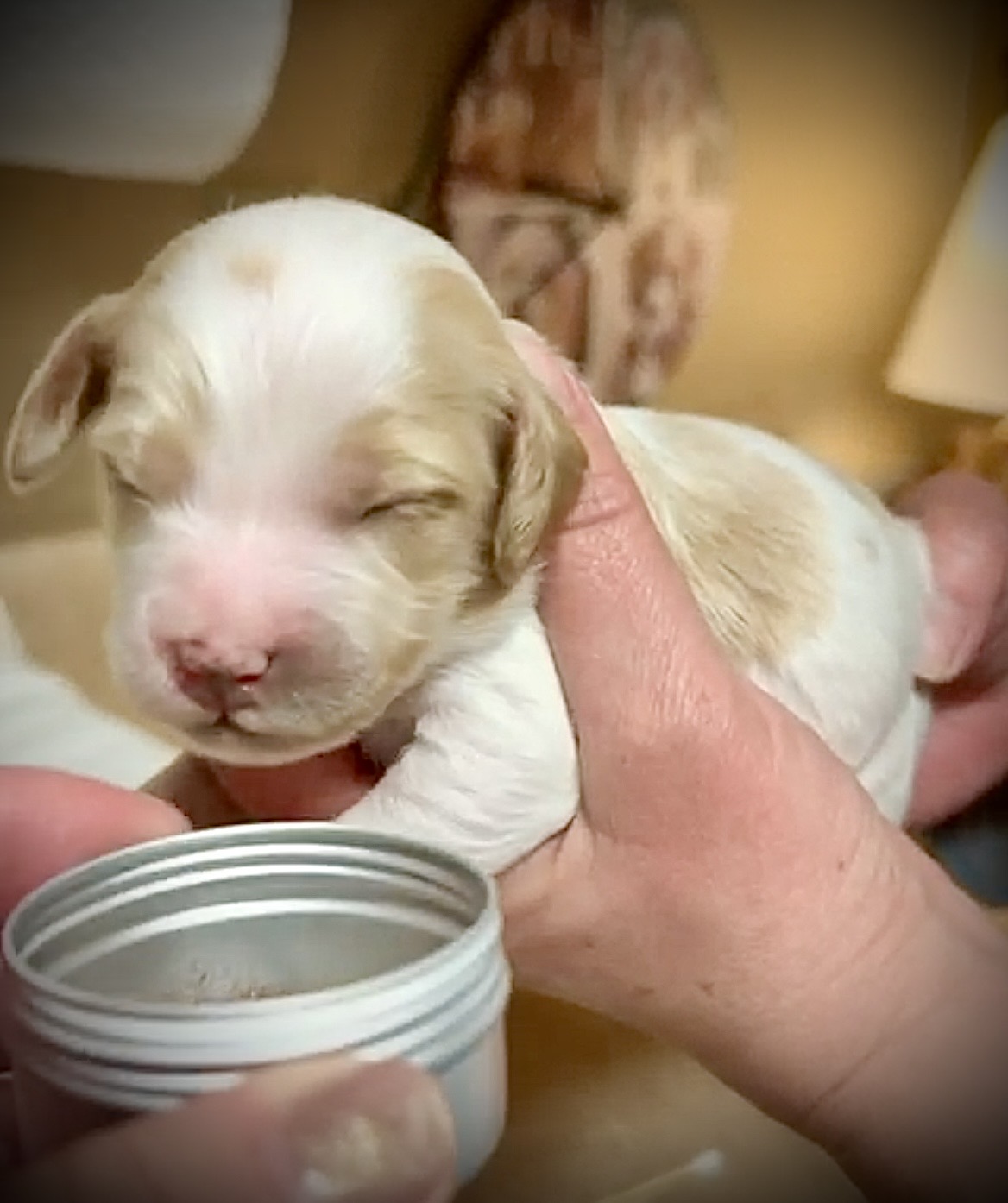
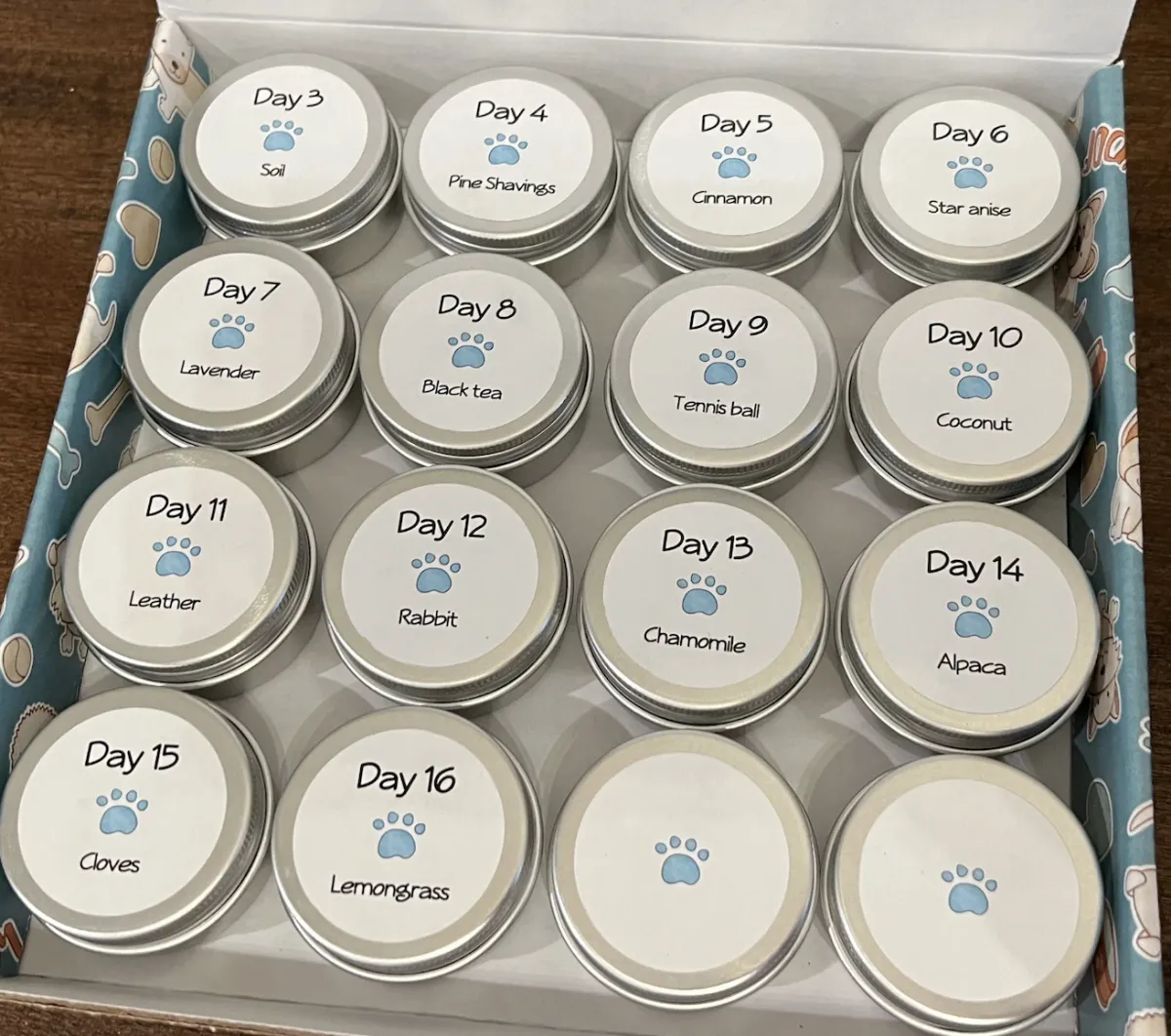
What is ESI?
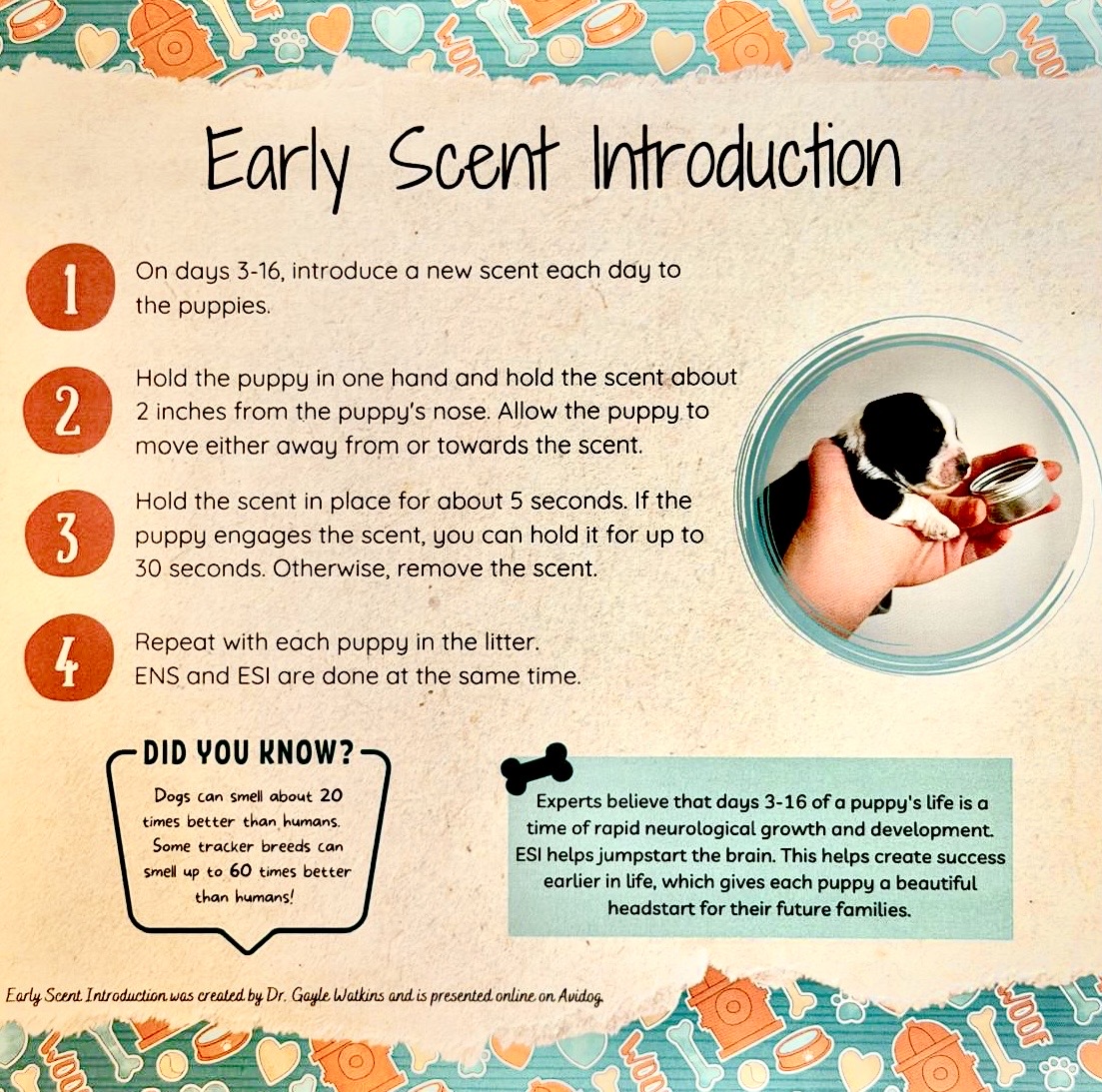
Early Scent Introduction incorporates gentle handling and stimulation of newborn puppies from days 3-16 of life.This is a low-risk enrichment tool utilized by experienced breeders to expose
neonates to various smells to determine likes, dislikes, develop sensory responses and exposure to new aromas.
These intentional exercises help to gently activate the senses very early in development to convey specific health benefits.
Guidelines for performing ESI sessions:
-Perform on days 3-16 of life
-Conduct therapy sessions in a quiet, peaceful, warm room
-Handle one puppy at a time and complete all exercises consecutively
-Keep sessions short and positive
-Wash hands and keep area clean for each new puppy session
-Use in tandem with Early Neurological Stimulation (ENS) Therapy
andthe 'Rule of 7' -or other socialization and exposure protocol- for continued enhanced development at the proper stages of growth.
Additional Care
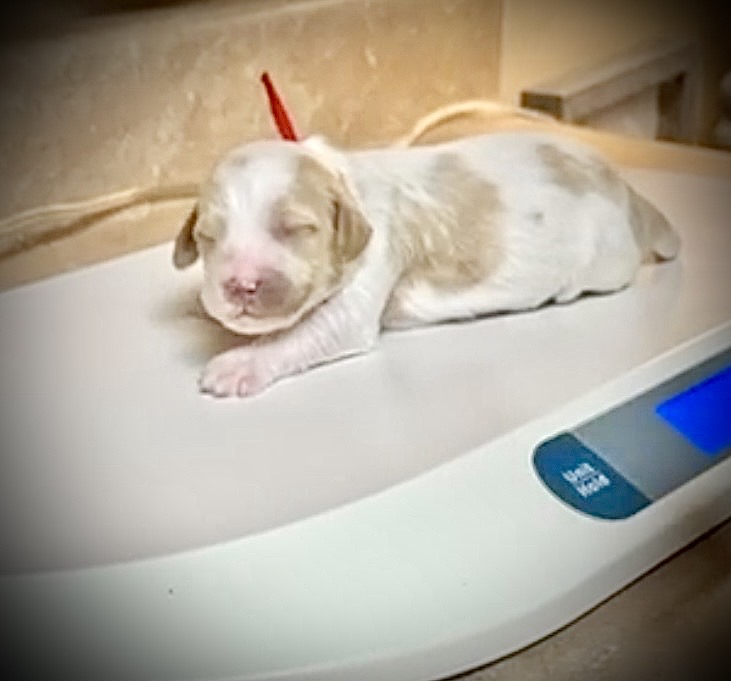
We will keep detailed charts on each one of our puppies- their daily weight, therapy sessions, temperament assessment exercises, bathing, feeding, grooming, and socialization experiences!
We will take the puppies to their first vet check-up for a health evaluation and first vaccines. Your puppy with NOT be old enough for a rabies vaccine until (ideally) 6 months of age.
If you ARE planning to breed your puppy, you will sign
a 'Breeding Rights' contract with our company and are required to pay the $3,000 fee for such rights to breed our dogs. Ethical and educated breeding is vital to protecting the lives of your Goldendoodles and upholding the integrity of the breed.
Puppy mills are NEVER acceptable and can
cause great harm to animals.
We will not tolerate spontaneous or irresponsible
breeding of our quality genetic lines and will pursue all legal means available to prevent and rectify such actions of those who purchase
our puppies and violate our terms of ownership.
If you are NOT planning to breed, you must spay or neuter your puppy within the first year of
purchase and email a copy of your vet record
showing proof of completed procedure to
[email protected]. We will follow-up
with each new owner and ensure this step
is completed as stated in the terms
of the purchase contract.

Socializing Your Puppy
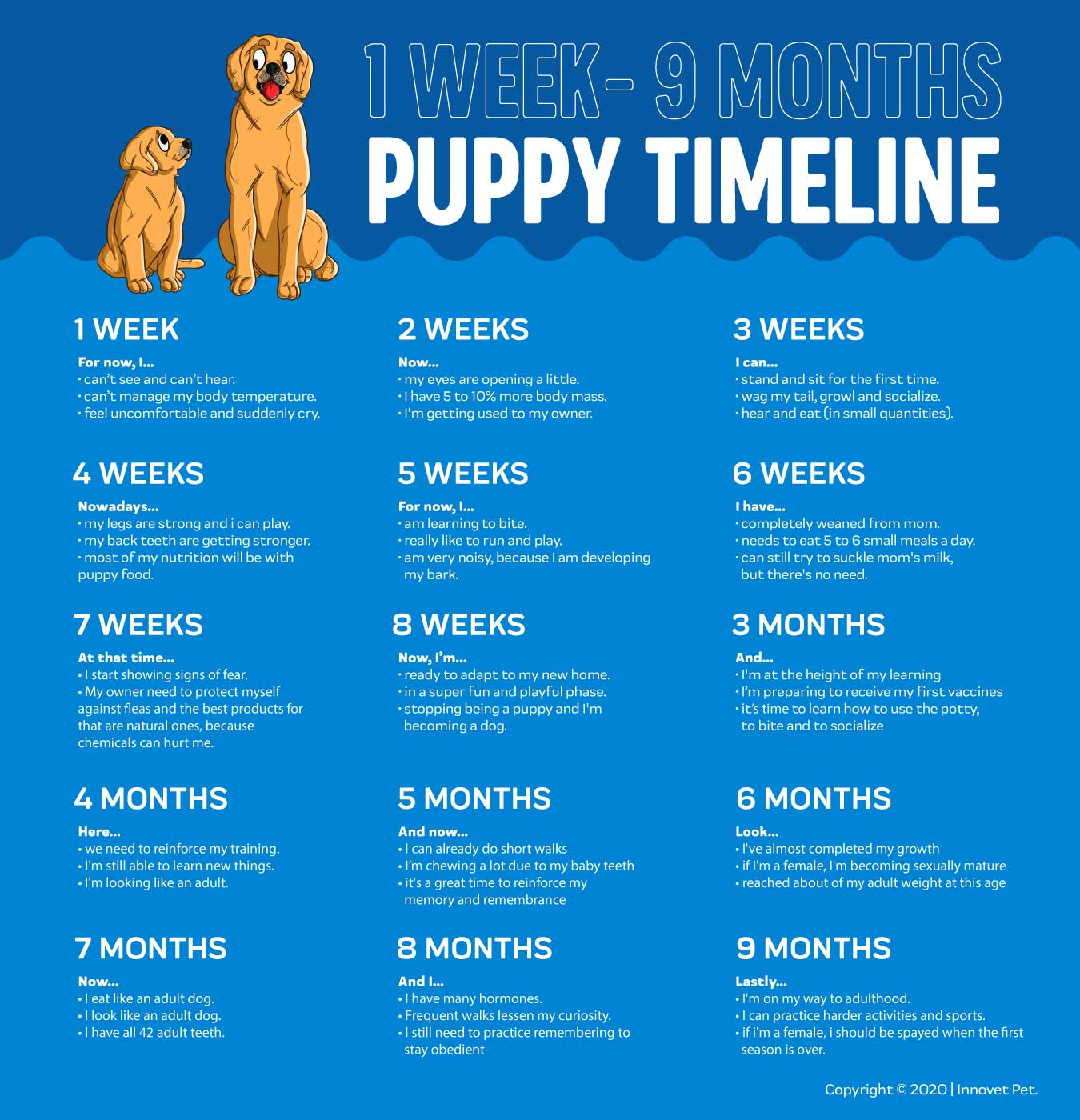
As puppies develop, they are ready for different things at different times. It is important to follow the development chart below and be aware of capabilities at each stage of growth as not to
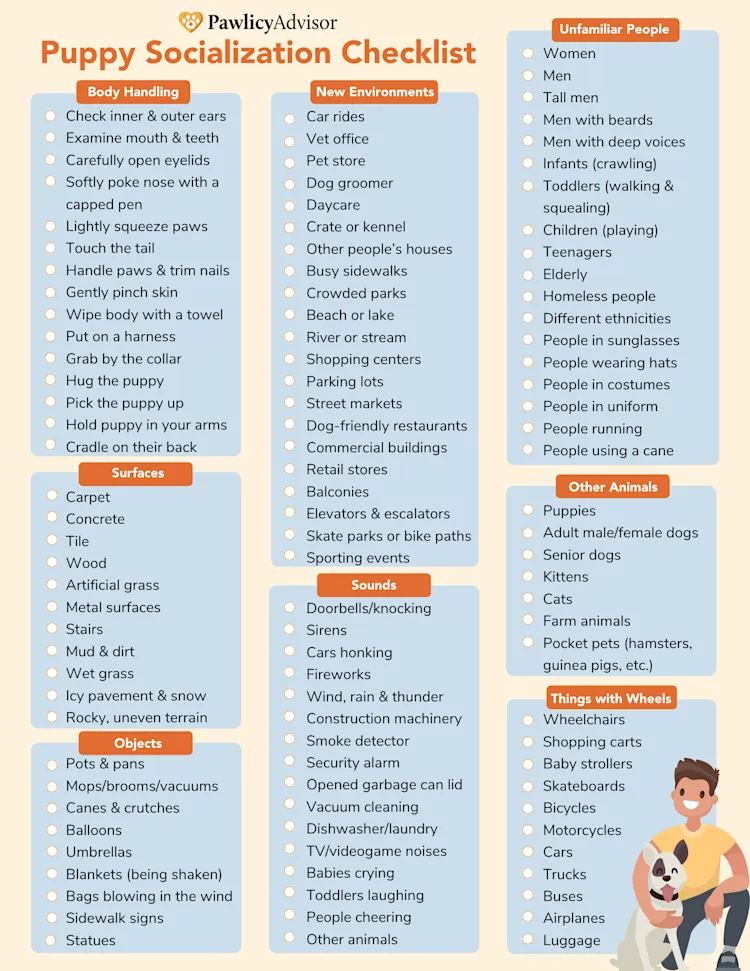
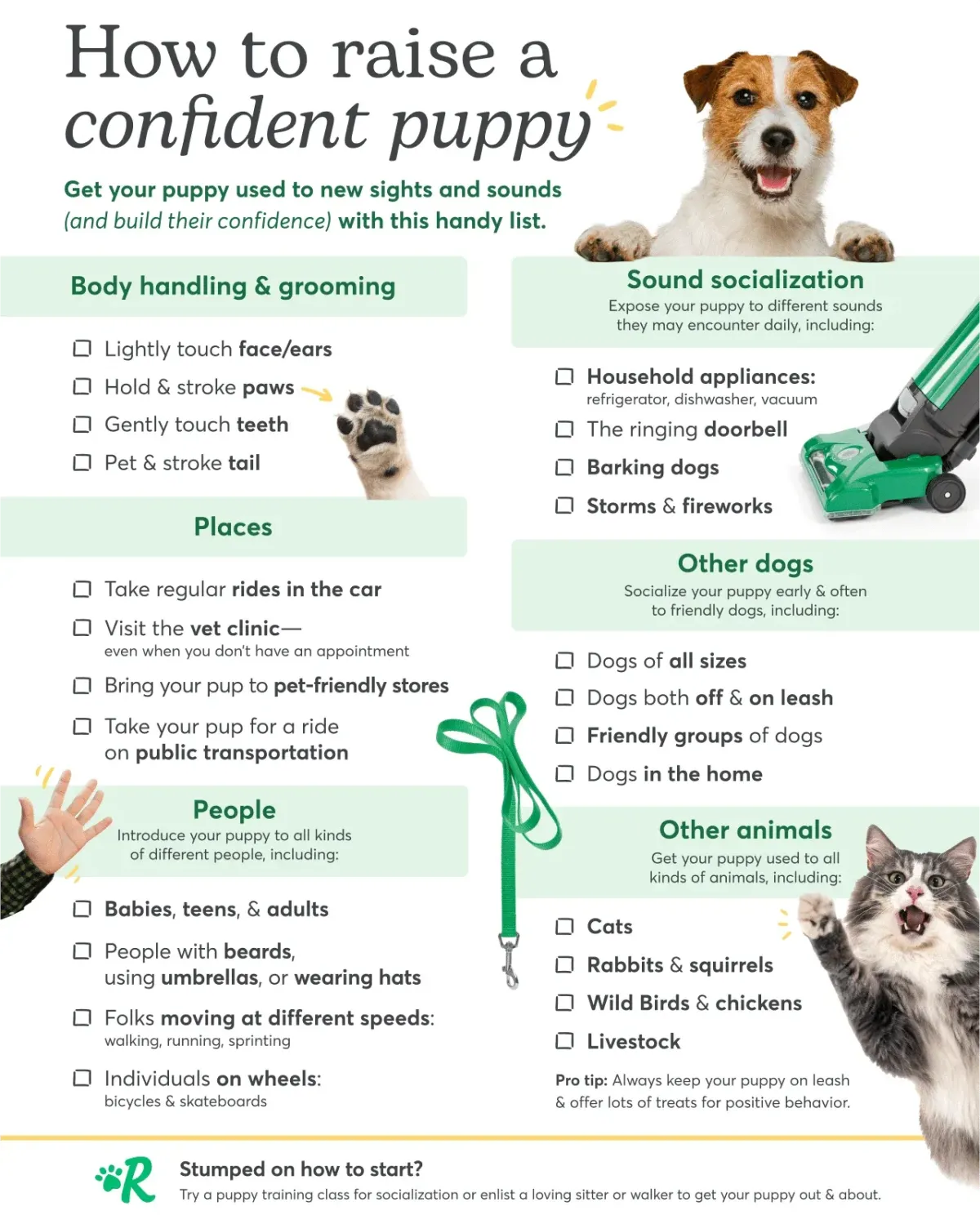
overwhelm your little puppy with too much. Doing so can be counterproductive and induce unnecessary stress. We start with socializing our puppies with small sounds, slight changes in touches, textiles, flooring, toys, regular household items and sounds, family life, outdoor play time, wagon rides and walks, car rides and exposure to other well-behaved dogs, cats, farm animals, children,
various heights/types of people etc.
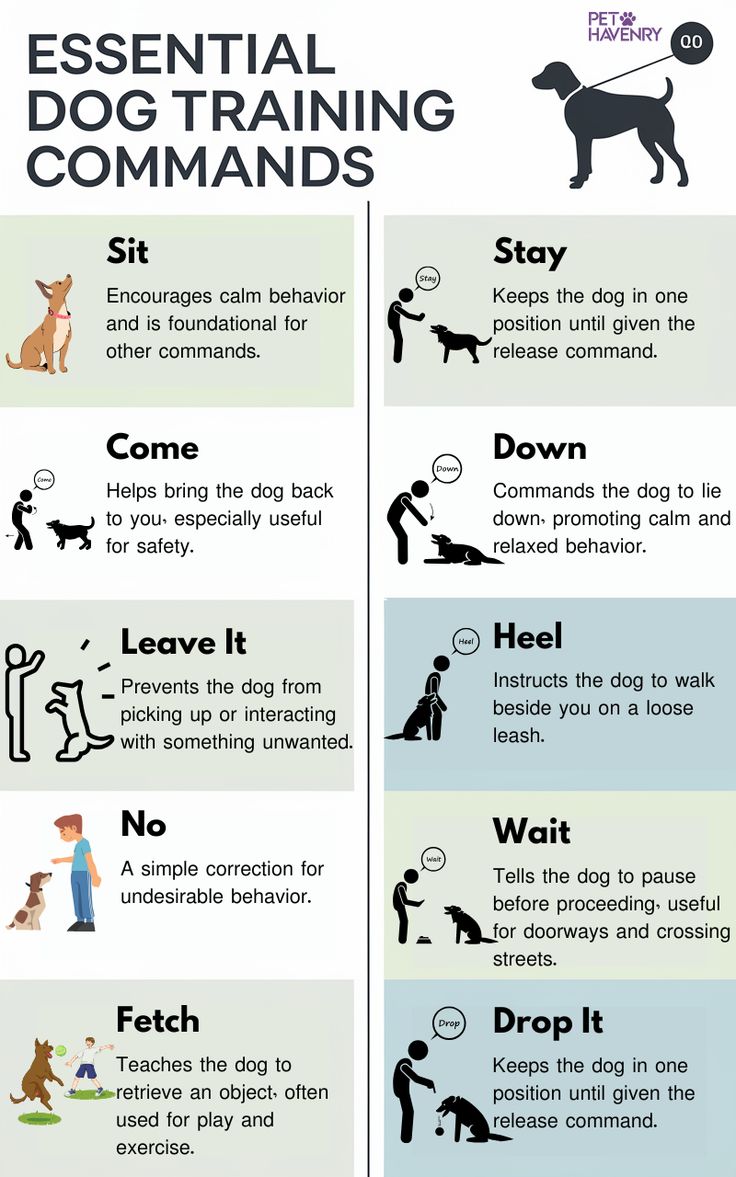
Here is a general list to keep in mind when you take your puppy home. Continue to expose them reasonably to various safe situations and scenarios. *Never intentionally scare, upset, endanger or surprise your puppy -which can cause emotional and physical trauma, negative behaviors and defensive retaliation.

Potty Training Your Puppy
Your puppy is GOING to have ACCIDENTS. Common reactions by owners are to get upset that your puppy has made a mess on your carpet and inconvenienced you with extra work and discomfort. Multiple, repetitive accidents can result in frustration for you and your little puppy.
Remember, YOU CHOSE THIS. You purchased a cute puppy that is a BABY and needs guidance to LEARN behaviors, self-control and boundaries.
NEVER hit or scream at your puppy for accidents.
They are not old enough to control themselves properly yet. Harsh reprimands or corporal punishment will only teach them to fear you and increase all around confusion and unwanted behavior.
DO follow these helpful approaches to kind and effective potty training methods:
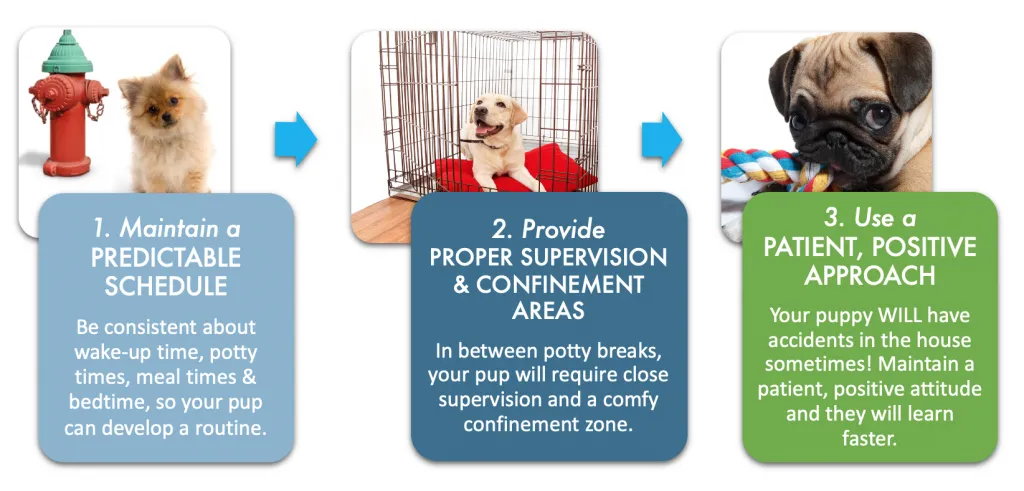
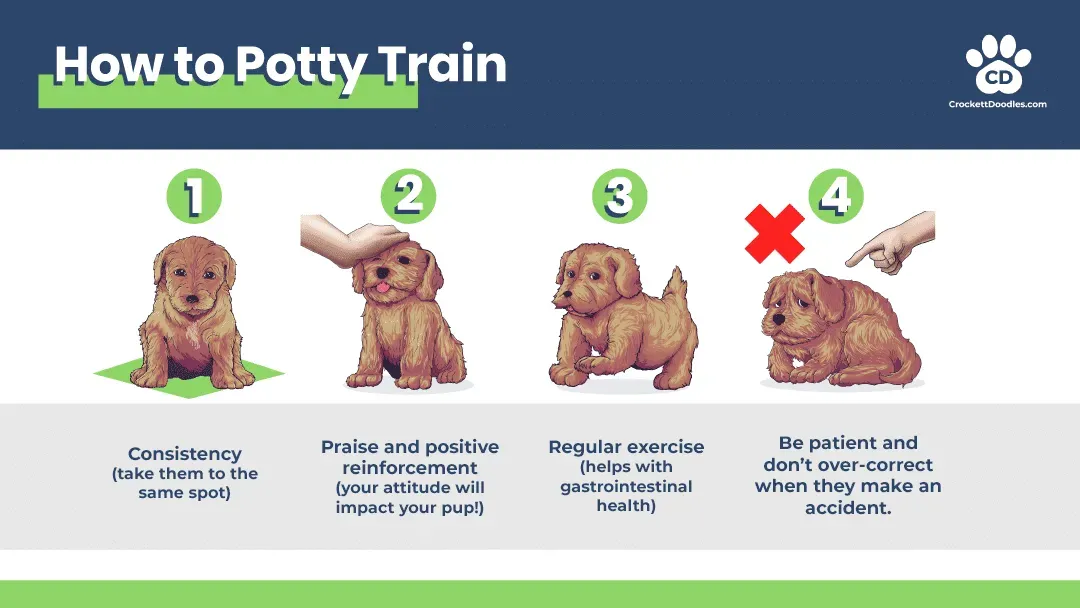
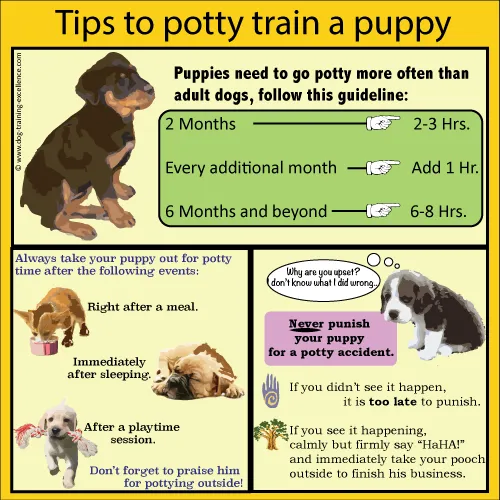
YES. You can DO this!
It will be difficult. You will want to sleep with your puppy on your bed, let it be 'FREE' and trust your little one -as if you just pulled a perfectly trained toy out of a box. DON'T.
Major Training Reminders:
-Do NOT let your puppy free-roam around your house. It WILL go to the bathroom everywhere.
It will chew and destroy things and eat what it shouldn't! It is a baby that need supervision!
-From the first day home, crate your puppy for 1-2 hours at a time.
Then, immediately take the puppy to the spot you want it to go to the bathroom
or help it go through the doggy door outside.
-Stay with your puppy outside. Say 'Go Potty' - positively- not harshly.
Repeat the phrase as the puppy sniffs, explores and circles.
-Be VERY patient. The puppy will take its time until it feel safe and ready to potty.
-Once the puppy FINALLY goes potty say 'Good BOY! or Good GIRL!' and click
a hand-held training clicker a couple of times and perhaps give a tiny treat chew.
-Then, play with your puppy in a directly supervised session for a bit
to allow it to exercise and receive positive affirmation and fun socialization.
-Then Immediately place the puppy back in the crate.
(Always have water and small amount of food in the crate)
You will not want to do this. Your puppy will cry and whine. It has been separated from
its mama and siblings and is missing them and adapting to its new home.
Keep his favorite chew toy, a t-shirt with your smell on it etc. in his crate.
This is NORMAL. You will want to comfort your puppy and let it be a snuggle plushy.
NOT YET. Your puppy WILL adapt and calm down and bond with you.
Repeat These Steps for 2 Weeks. You will be VERY grateful you did.
Your puppy is learning boundaries and proper self-control in a consistent, repetitive process until it becomes second-nature. Your puppy needs structure and positive reinforcement.
If you want to save your carpet & be able to trust your pup in the house- FOLLOW THROUGH.
Remember:
You are taking your puppy home when it is only 2 months old! Start training right away and recognize it is just a baby learning slowly. It will take a puppy until it is almost 5-8 months old to mentally mature enough to thoroughly get 'potty training' down. Be PATIENT. Be steadfast and consistent in your training. Do all you can to provide a dog door to a safe, fenced-in outdoor dog run and you will have a MUCH faster, easier time with bathroom training.
They will learn VERY quickly to go when they need to in their designated place.
Joy Meadows Goldendoodles
406-422-9358
Copyright 2026